 VOXARIA
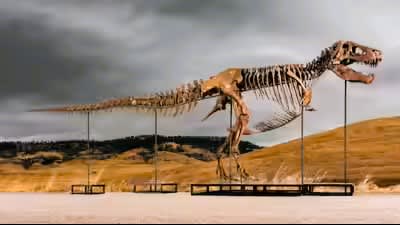
The trend of auctioning dinosaur fossils—particularly iconic specimens like the Tyrannosaurus rex—has sparked significant debate among paleontologists and the scientific community. While auction houses often frame these sales as opportunities to preserve natural history, critics argue that the commercialization of fossils is detrimental to science for several key reasons:
Barriers to Scientific Research
- Loss of Accessibility: When a T. rex is purchased by a private collector, it often disappears into a private residence or a vault, rendering it inaccessible to the scientific community. Paleontologists rely on the ability to study "type specimens" and original fossils to make new discoveries about anatomy, growth, and biology. Once a specimen is in private hands, researchers may be denied the opportunity to examine it, potentially stalling scientific progress.
- Increased Costs: The skyrocketing price tags—with some specimens estimated at $30 million or more—effectively price out most museums and academic institutions, which rarely have the funding to compete with wealthy private investors.
Ethical and Regulatory Concerns
- Commodification of Science: Many scientists view fossils as part of a collective "world heritage" that should be protected and preserved for the public good, rather than treated as luxury "art" or status symbols.
- Lack of Transparency: Private sales often lack the rigorous peer-review and documentation processes that define museum acquisitions. This has led to issues regarding the authenticity and composition of skeletons. For instance, the auction of the T. rex "Shen" was famously cancelled after it was revealed that it was largely composed of casts of another specimen ("Stan") rather than original bones, a fact that had not been fully disclosed or was misleadingly presented.
Legal and Intellectual Property Issues
- Copyright Controversies: As seen in the case of "Stan," some fossils or their casts are subject to intellectual property rights. If a specimen is restored using unauthorized copies of copyrighted bones, it can lead to legal disputes, further complicating the specimen's history and scientific validity.
- Extraction Rights: In countries like the U.S., fossils found on private land can generally be sold at the owner's discretion, which creates a "wild west" environment for commercial fossil hunting. This often encourages profit-driven excavation rather than systematic, site-specific research that preserves the geological context of the find.
The Role of Auction Houses
Auction houses, such as Sotheby’s or Christie’s, argue that they provide a service by helping fossil hunters recover the costs of painstaking excavation and preparation. They maintain that the private market helps "save" specimens that might otherwise be destroyed by the elements or remain undiscovered. However, paleontologists counter that "saving" a fossil only to hide it from the public and researchers contradicts the ultimate goal of paleontology: to understand and share the history of life on Earth.
The controversy of the fossil market
This documentary provides an in-depth look at the multi-million dollar trade in dinosaur fossils and the concerns raised by academics regarding its impact on the scientific community.